
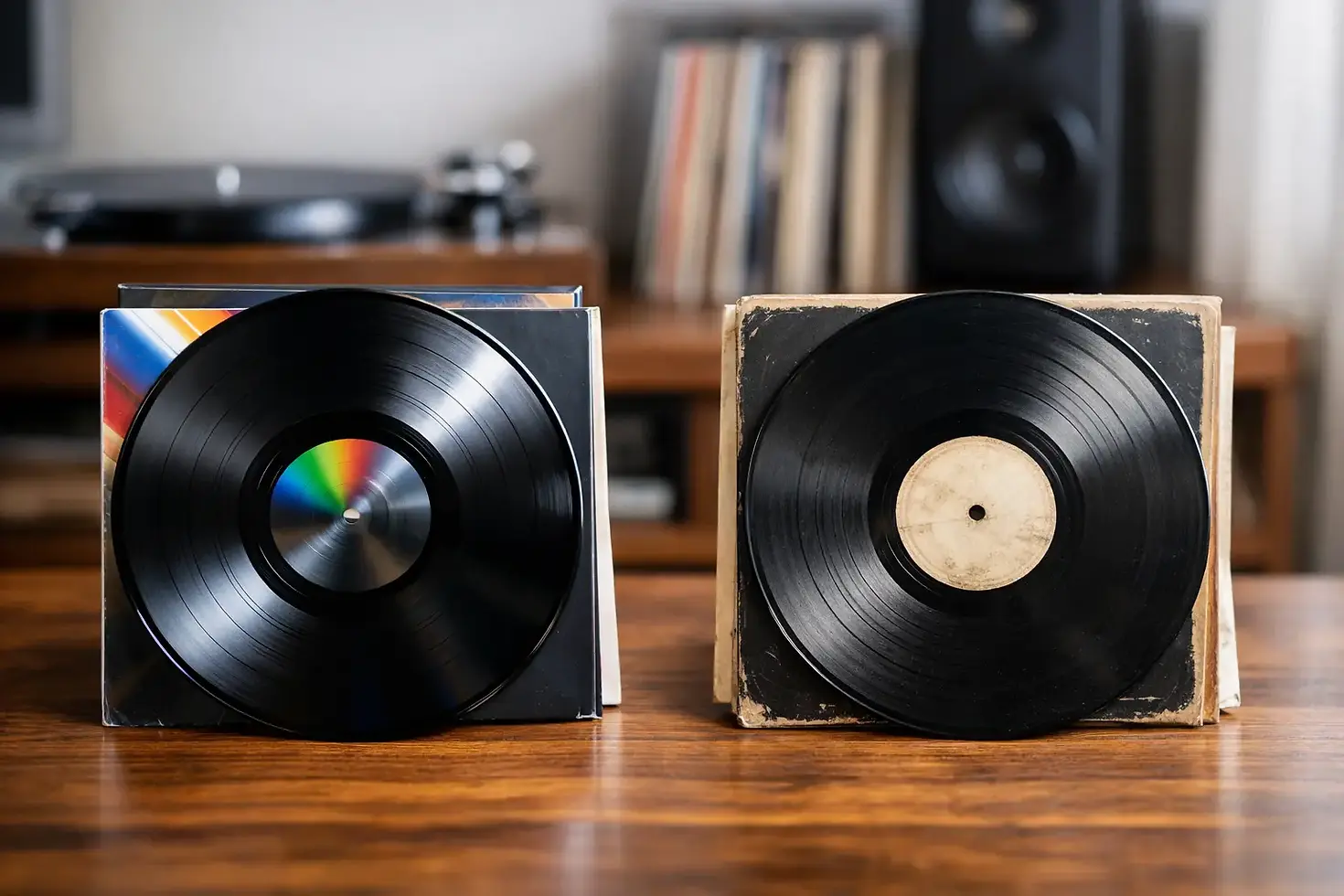
Remastered Vinyl Versus Original Pressings
A first pressing of a 90s house classic can feel like holding a piece of the night itself: the original label design, the catalogue number, the version DJs actually pulled from their bags. But nostalgia alone does not decide the listening experience. In the debate around remastered vinyl versus original pressings, the better record depends on what you want from it: period-correct sound, a clean club-ready copy, improved detail, collectability, or simply the right mix on the right format.
For dance collectors, this is rarely a theoretical question. You may be choosing between a treasured original 12-inch with a few years of booth wear and an officially licensed reissue cut from restored masters. Both can earn a place on the shelf. The trick is knowing what you are hearing, what you are buying, and why it matters.
What an original pressing captures
An original pressing is the edition manufactured at, or close to, the time of a record's first release. With dance music, that can mean the exact 12-inch that moved through specialist shops, pirate radio circles, raves and club systems when the tune was new. Its appeal is inseparable from context.
Originals often preserve the producer and label's initial intent, including the track selection, running order, mix versions and artwork. A debut pressing may contain an extended vocal mix that never made a later album reissue, a dub tucked onto the B-side, or a rawer edit that was subsequently replaced. For collectors of house, garage, trance and crossover electronic records, those details are not footnotes. They are the release.
Sound-wise, a strong original can be extraordinary. Many classic dance records were cut for DJs and loud systems, with a direct, physical presentation that makes sense the moment the kick lands. A well-mastered original 12-inch can deliver serious energy, width and low-end presence without sounding overly polished. That slightly rough edge may be exactly what gives it character.
There is a catch: age does not guarantee quality. The same record that looks perfect in a frame may have spent years being back-cued, handled at a booth, played with a worn stylus or stored badly. Surface noise, groove wear, distortion on loud vocals and a tired high end are common on heavily used club records. Condition is often more decisive than whether the copy is original.
The collector value of first editions
A genuine first pressing carries provenance. It can represent a label's first run, a particular country of manufacture, an early sleeve variation or a moment before a track became an anthem. Scarcity and historical significance can make it highly desirable, particularly where the original run was modest or the record was only distributed to DJs.
That does not mean every original is automatically more valuable or more meaningful. Some were pressed in huge numbers, while later editions may be the definitive version because they restore missing mixes, use better source material or present a complete album properly across two records. Collectability is about the specific release, not just the date on the label.
How remastered vinyl changes the picture
A remastered vinyl edition revisits the audio before it is cut to a new lacquer. At its best, it gives essential music another life without sanding off what made it special. That may involve locating the original master tapes or high-resolution production files, repairing issues in the source, adjusting tonal balance, and creating a fresh cut suited to modern pressing standards.
The word ‘remastered’ is not a promise of a better sound on its own. It tells you that the audio has been revisited, not how carefully it has been handled. A thoughtful remaster can open up detail obscured on an old pressing, improve stereo focus, control harshness and give bass more definition. A careless one can push loudness, compress dynamics or make a club record feel less alive.
For electronic music made in the 90s and 2000s, source quality matters enormously. Some releases began as DAT-era masters, some were assembled from early digital sessions, and others were cut quickly to meet the momentum of a scene. An official reissue project with access to the correct masters has a chance to present the music with greater consistency than a worn original sourced from the second-hand circuit.
Fresh vinyl is another practical advantage. A clean new pressing should offer a quieter background and less risk of the groove damage that affects many original DJ copies. If the record is one you want to play often - not merely own - that is a meaningful benefit. You can put the needle down on a fresh copy of a beloved anthem without treating every spin as a preservation exercise.
A remaster is only as good as its choices
Look beyond the word on the hype sticker. The most useful clues are whether the edition is officially licensed, whether it identifies the original label or rights holder, and whether mastering or cutting information is provided. Clear catalogue details, credible artwork reproduction and attention to the original configuration all suggest a release made with the record's history in mind.
Format also shapes the outcome. A single LP squeezed with a long running time can compromise level and bass compared with a double LP cut over wider groove space. A 12-inch single gives a dance track room to breathe, particularly when the mixes are properly sequenced. Coloured and marble vinyl can be visually brilliant additions to a collection, but the quality of the cut and pressing remains the main event.
A well-curated remaster should respect the club function of the music. It is not about making a 1996 garage record sound like a contemporary streaming master. It is about preserving its swing, weight and atmosphere while giving the source the care it deserves.
Remastered vinyl versus original pressings: what to listen for
If you can compare editions, do it on a system you know. Start with the opening bars, where background noise and stereo placement are easiest to notice. Then move to the busiest section of the track: a vocal peak, a dense breakdown, a high-hat pattern or the point where the full bassline arrives.
Listen for punch rather than simple volume. An original may feel louder because it was cut hot, but a good remaster can reveal separation between kick, bass and percussion that makes the groove hit harder. Pay attention to sibilance on vocals, cymbals that turn brittle, distortion during big chords, and whether the low end remains controlled when the arrangement gets busy.
Do not mistake a cleaner presentation for a more authentic one, or a grainier original for a more soulful one. Each may be right for a different reason. The original may have a raw midrange bite that recalls a particular room and soundsystem. The remaster may let you hear synth textures, reverb tails and arrangement detail that were always there but buried by a tired copy or a limited first cut.
Choose according to how you collect and play
Buy the original when the first-edition story matters most. Perhaps it is the exact label variant you remember, a rare territory pressing, or a release whose original mix and sleeve are central to its identity. If you find a clean copy at a sensible grade, it can be a deeply satisfying object and a direct connection to the era.
Choose the official remaster when sound quality, reliable playability and a considered package are higher on the list. It is especially compelling for records that were hard to find in clean condition, originally pressed in limited quantities, or deserving of a full reappraisal. A remastered double LP can also make far more sense than an original album spread too tightly across one disc.
There is no rule saying you must pick a side. Plenty of serious collections hold both: the original for history, the remaster for repeat plays. One preserves the moment a record first entered the culture; the other proves that its power has not faded.
The best choice is the one that makes you want to pull the record from its sleeve, cue it up and let the room change. Whether that comes from an era-worn original or a carefully cut reissue, the record still has one job: to move you.


