
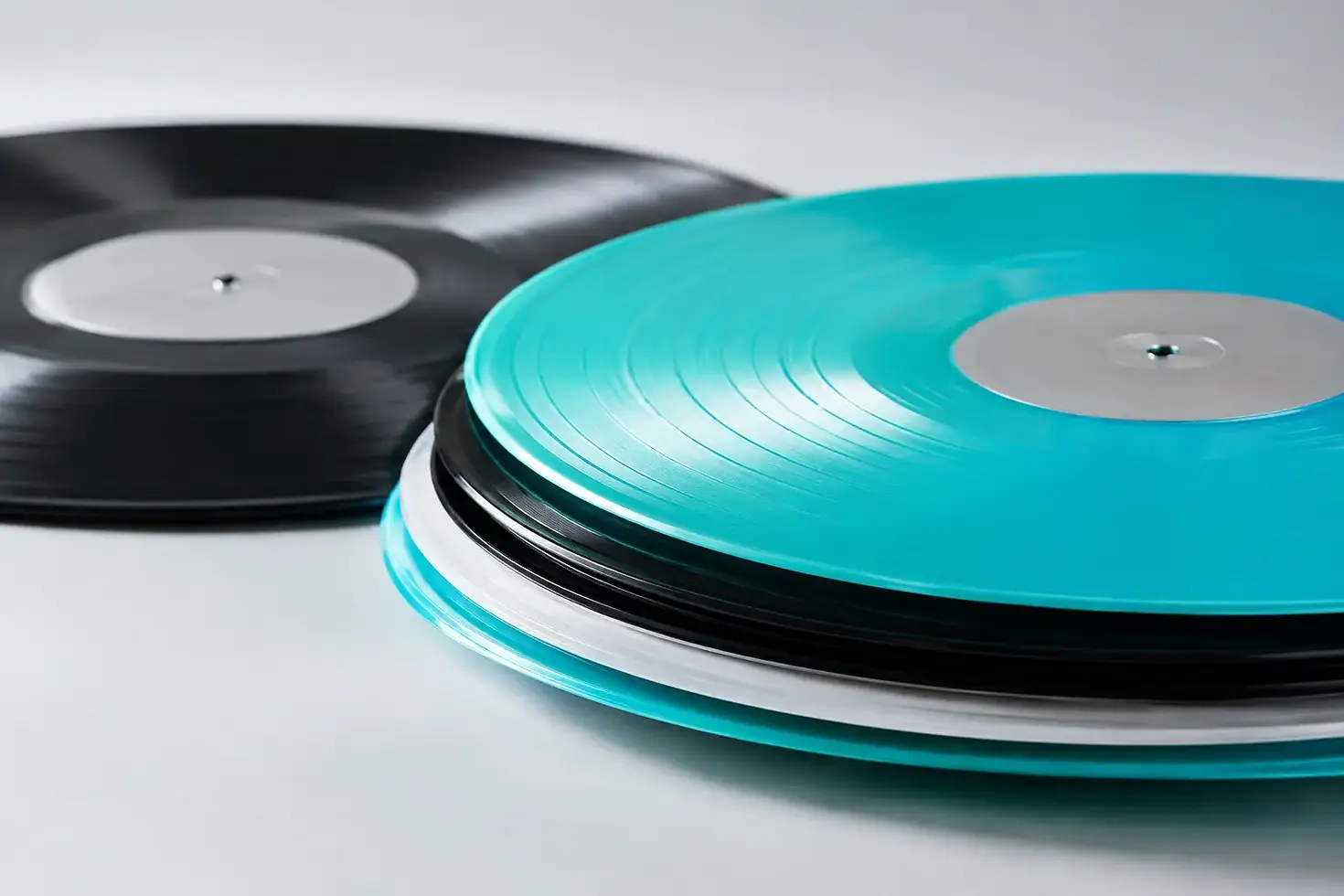
Does Coloured Vinyl Warp Faster Than Black Vinyl?
A translucent 12-inch under club-style lighting looks special, but it also prompts a fair collector question: does coloured vinyl warp faster than conventional black wax? The short answer is no, not by default. A well-made coloured pressing stored properly should be no more prone to warping than a black one.
The longer answer matters, especially when you are buying editions built to be played, displayed and kept for years. Colour can affect how a record absorbs light and heat, while some visual effects can make minor imperfections easier to spot. But the real causes of warping are usually heat, pressure, poor storage and the way a record was pressed and cooled - not the turquoise, clear, white or marbled finish itself.
Does Coloured Vinyl Warp Faster in Real Conditions?
Vinyl records are made from PVC-based compounds. Black records traditionally use carbon black as a colourant, while coloured editions use different pigments or additives to create their finish. In normal indoor conditions, neither route automatically produces a record that will lose its shape faster.
Warping happens when vinyl becomes warm enough to soften and is then placed under uneven pressure, or allowed to cool in a distorted position. Leave any record in direct sun on a windowsill, in a hot car, beside a radiator or tightly packed at an angle, and it can deform. Black vinyl may absorb more heat in strong sunlight than a pale or clear record, so it is not automatically the safer format outdoors. The practical answer is simpler: no vinyl belongs in direct heat, whatever its colour.
A coloured pressing can sometimes appear more warped because light passes through translucent material differently. Under a bright lamp, a slight edge lift or gentle dish can be more visible than it would be on an opaque black disc. Visibility is not the same as severity. The test that counts is whether the record sits and plays correctly on a properly set-up turntable.
Pressing Quality Matters More Than Colour
For collectors, the more useful question is not whether coloured vinyl is inherently fragile. It is how carefully the record was manufactured. A record needs sufficient, even cooling after pressing. If it is removed from the press too quickly, handled while still warm or packaged under unfavourable conditions, it may not settle perfectly flat.
That can happen with black vinyl, coloured vinyl and clear vinyl alike. Multi-colour effects such as splatter, marble and swirl designs involve more complex material preparation, but complexity does not mean poor quality. A carefully controlled press can produce striking colour variants that play beautifully and remain stable for decades.
There are trade-offs worth understanding. Certain pigment mixes can behave differently during pressing, and some intricate effects may make tiny surface marks, non-fill or uneven sheen easier to notice. Those are manufacturing and visual-finish questions, rather than evidence that colour causes warping. A premium physical release should be judged as a complete object: the mastering, pressing, sleeve construction, centre labels and final quality control all matter.
Why Records Warp in the First Place
Heat is the main enemy. Vinyl does not need to melt before it becomes vulnerable. Sustained warmth can make it pliable enough for its own weight, a tight stack or an uneven surface to alter its profile. This is why records left in conservatories, loft spaces and parked cars are particularly at risk during warmer months.
Pressure is the second issue. Records stored flat in tall piles can gradually take on stress, particularly if the stack is uneven or heavy. Storing them vertically is the accepted approach, but vertical does not mean crammed together. A shelf packed too tightly can put pressure on sleeves and discs; one with too much empty space can allow records to lean. Keep them upright, supported and comfortably spaced.
Packaging and handling also play a part. A record squeezed into an overly tight inner sleeve, exposed to a bent mailer or left against a heat source can suffer before it ever reaches the turntable. Keep original packaging clean and dry, use a quality inner sleeve where appropriate, and avoid leaving a record on the platter after a listening session if sunlight reaches the deck.
Coloured Vinyl Storage for Collectors
The fundamentals are reassuringly straightforward. Treat a coloured edition as you would a favourite black 12-inch: store it upright, out of direct sunlight, at a steady room temperature and away from moisture. The goal is stability, not museum-level ceremony.
For a collection of dance reissues, double LPs and larger sleeves, good shelving makes a noticeable difference. Use furniture that supports records vertically without bowing under the weight. Do not overfill each section, and do not let oversized box sets force nearby sleeves to lean. If a record arrives with a removable outer protective sleeve, keeping it protected can help preserve the jacket from scuffs and shelf wear, though it will not compensate for poor heat management.
A few habits are especially worthwhile:
Keep records away from radiators, sunny windows and hot audio equipment.
Never store vinyl in a car, even for a short stretch on a warm day.
Avoid stacking records horizontally, particularly under books or other heavy objects.
Let a record return to room temperature before playing it if it has travelled through unusually cold or hot conditions.
These precautions are not exclusive to collectible colour variants. They are simply the conditions that help any record stay flat, clean and ready for the next play.
A Small Warp Is Not Always a Playback Problem
Collectors often spot a slight ripple and assume the record is damaged beyond use. In practice, the important distinction is between a cosmetic deviation and a playback issue. A minor edge warp may be visible while having little or no audible effect, particularly on a heavier, well-supported turntable. A severe dish warp, a pronounced edge lift or a record that causes obvious pitch movement is a different matter.
Before judging a record, place it on a level platter and watch the edge as it rotates. Then listen. Is the stylus tracking securely? Is there audible wow, a repeated thump, skipping or a clear change in pitch? If not, what you are seeing may be slight rather than significant.
Avoid improvised fixes involving heat, hairdryers, ovens or weighted glass. Vinyl can be damaged permanently with surprisingly little excess heat, and a home remedy can turn a manageable issue into a ruined record. Purpose-made flattening services and equipment exist, but they are best considered carefully, especially for a valued edition with a delicate sleeve or distinctive finish.
The Collector Verdict on Coloured Pressings
Coloured vinyl has earned its place in dance music collecting because it adds another layer to the release. A vivid single, a smoky marble double LP or a transparent edition can echo the artwork, the era and the energy of the music before the needle even drops. It is part of the object’s appeal, not a compromise that must be accepted reluctantly.
So, does coloured vinyl warp faster? Not when it is pressed well and looked after properly. The colour of the disc is far less influential than exposure to heat, storage pressure and general handling. Choose the edition that connects with the record, give it a stable home on the shelf, and keep it away from the sun. Then let the music do what it was made to do: take you straight back to the moment the room changed.


